Probate: Get To Know The Process!
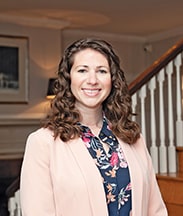
By Jaclyn Quinn, Esq.
Delaware Community Reinvestment Action Council, Inc.
There is a lot of talk about “avoiding probate” but what is it exactly? Many people do not understand what probate is until they are personally faced with the process. Here is an overview to help inform your decisions about your own estate planning and how you may approach probate if it is necessary for your loved one.
To put it simply, probate is the process by which a decedent’s property is gathered and then distributed—first to creditors, then to beneficiaries. Any solely owned property is subject to probate unless a beneficiary is designated on the account or asset. If the decedent had a will, then the will names an executor who is responsible for handling the estate. Absent a will, the Register of Wills appoints an administrator who performs the same duties as an executor. This person is commonly referred to as the Personal Representative.
To get started, the next of kin (if there was no will) or executor named in the will contacts the Register of Wills Office in the county where the decedent lived and presents the death certificate and the will to open the estate. Other opening documents are also required, such as an opening petition and information statement, which give the Register’s office an idea of how much money the estate will have and who will be involved. Costs for opening an estate are typically under $300.00. Once the estate is opened, the Personal Representative is given letters that name him or her as such. Those letters are presented to financial institutions and anywhere estate business must take place.
Often, one of the first steps the Personal Representative takes is to open an estate bank account. This can be done at any bank of the PR’s choosing. Within 90 days of opening the estate, an Inventory is due, listing all assets owned by the decedent at the time of his or her passing. This includes real estate, bank accounts, personal items, and any other property that lacks a designated beneficiary.
Within eight months of the date of death, all creditors owed money by the decedent are required to submit a written claim for payment. If the estate has funds to pay these creditors, they are paid in order of priority set out by state statute. During this time, the Personal Representative continues to gather documents, ensures matters are resolved, and determines whether or not a final tax return and estate tax return are required.
After the claims period passes, the personal representative files a First and Final Accounting to demonstrate all of the estate’s finances– from bills paid, to income received– were accounted for and handled properly. Once the accounting is approved and closing costs are paid, any remaining funds are distributed to the beneficiaries.
Assets that are jointly owned with rights of survivorship, held in trust, and designated to a beneficiary—such as on life insurance, retirement account, brokerage account, etc., do not pass through probate.
Overall, when it comes to Probate, it is advisable to act as soon as practical. There are timeframes specified by law, and the process must be followed. The Register of Wills office in the county of the decedent is a great place to start to gather information. If you need legal advice, Jaclyn Quinn is licensed to practice law in Delaware and she and her colleague Matt Carucci at the Delaware Community Reinvestment Action Council are available to assist. For more information, or to schedule a consultation, please call paralegal Mayela Rosales at 302-230-2970 or email [email protected]. For more information, visit dcrac.org.
Bio
Jaclyn Quinn, Esq. joined the Delaware Community Reinvestment Action Council (DCRAC) in 2011, first as a volunteer, then as staff. In 2014 Jaclyn opened and grew her private practice until 2019, when DCRAC Law opened to the community. DCRAC Law is a nonprofit law firm providing tax, title, and other legal services to those unable to pay market rates.
Jaclyn graduated with a B.A. in Political Science from The College of New Jersey before moving to Delaware to pursue her J.D. at Widener University- Delaware Law School. She was admitted to the Delaware Bar in 2012, and is also barred in U.S. Tax Court and U.S. Immigration Court. She has volunteered with the Office of the Child Advocate, DVLS, and assists as pro bono counsel in a variety of cases.
Jaclyn Quinn, Esq. Delaware Community Reinvestment Action Council (DCRAC)
302-298-3251 [email protected] www.dcrac.org
@dcracdelcra on instagram & @DCRACDelCRA on facebook
600 South Harrison Street, Wilmington, Delaware
One East Laurel Street, Georgetown, Delaware